Unicaf University Hosts Menstrual Health Dialogue Supporting Women and Girls
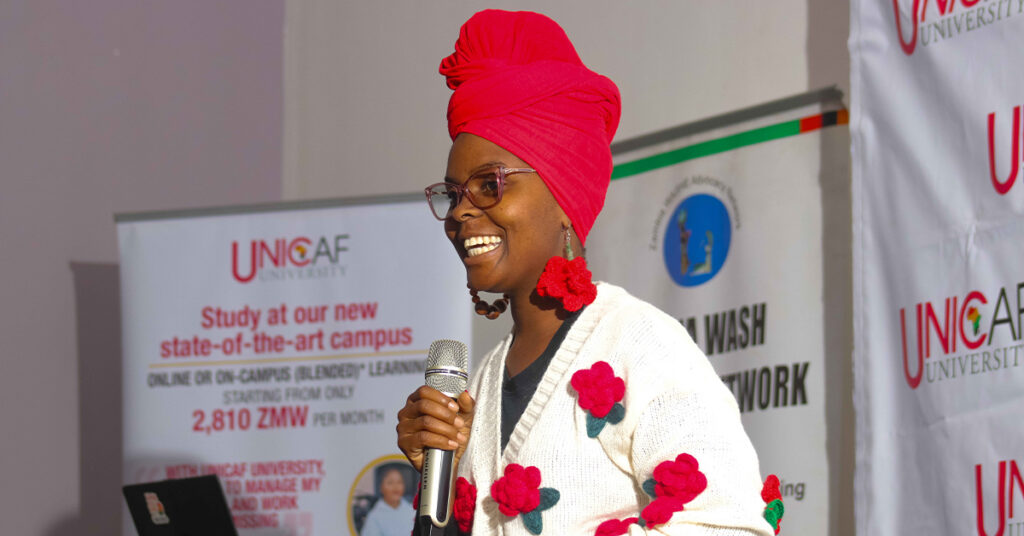
Unicaf University in Zambia proudly hosted a dialogue on menstrual health on May 28, 2026, which brought together 50 participants from a range of disciplines including healthcare, academia, civil society, youth networks and policy-making circles. The aim of the event was to reframe menstrual health as a national development priority requiring coordinated policy and practical action by recognising its detrimental effects on the health, education and economic opportunities of women and girls across Zambia.
The event began with a showcase of menstrual health products, research and social enterprise innovations from across Zambia, followed by opening remarks from Unicaf University Vice-Chancellor Professor Douglas Kunda. The Vice-Chancellor called on participants to take what they have learned from awareness campaigns such as this in order to create practical, real-world, sustainable solutions to menstrual health challenges. Subsequently, Guest of Honour Ms Malama Munkonge spoke to participants, followed by a keynote address by Mr Bernard Miti.
After the keynote address, Dr Nachizya Edith Namukanga, the acting doctoral coordinator at Unicaf University and epidemiologist affiliated with Women in Global Health Zambia, presented evidence-based analysis on how menstrual health affects economic opportunities, educational outcomes and gender equity in Zambia.
Next up was Youth WASH (Water, Sanitation and Hygiene) ambassador and consultant, Ms Nkosha Kachusha, who encouraged participants to examine menstrual health through a policy and systems lens. Particular attention was paid to how systemic and infrastructural changes can either support or undermine progress in addressing menstrual health challenges. Ms Kachusa also explored financing gaps in menstrual health programmes, market opportunities for locally produced menstrual health products, as well as the importance of community ownership and participation in effective and sustainable menstrual health solutions.
Following the panel discussion, participants engaged in interactive group dialogue, during which they reflected on barriers to and opportunities for policy reform and implementation. The groups also examined the roles of various stakeholders ranging from those in government, the private sector, civil society and local communities, in collectively and individually addressing and improving menstrual health challenges and outcomes across the country.
Lastly, during the youth innovation pitch session, selected youth-led social enterprises presented their menstrual health solutions, demonstrating strong potential for both investment and scalability. The session effectively showcased the creativity and entrepreneurial spirit of young Zambians in addressing menstrual health challenges.
Overall, the event proved to be an incredibly worthwhile endeavour, providing valuable insight into menstrual health challenges faced by women and girls across Zambia, while fostering open, constructive dialogue, reducing the stigma typically associated with discussions concerning private health issues.
Unicaf, as the leading provider of quality higher education in Africa, remains committed to supporting women and girls not only through accessible online learning and generous scholarship opportunities, but also by providing a platform for engagement in policy, financing and community initiatives that address the challenges they face academically, professionally and personally.
Recent Posts

October 20, 2026