Unicaf University Hosts Insightful Lecture on Sustainable Health Financing
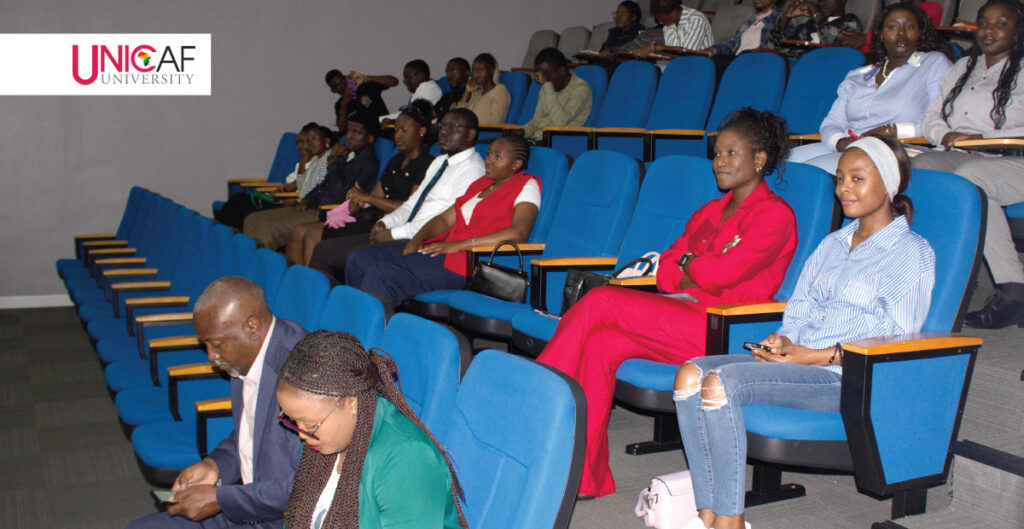
Unicaf University successfully hosted an engaging and thought-provoking open lecture titled “Sustainable Health Financing for Universal Health Coverage (UHC): What Must Change in Zambia by 2030.” The session was led by Dr Clement Chela, Dean of Health and Applied Sciences, and brought together professionals, students, and key stakeholders from across the healthcare sector.
The lecture attracted representatives from the National Health Insurance Management Authority (NHIMA), the Centre for Infectious Disease Research in Zambia (CIDRZ), and SAICRIO, reflecting strong industry interest and the relevance of the topic. The session focused on the critical reforms and strategic shifts required to achieve Universal Health Coverage in Zambia within the next four years.
Participants engaged actively throughout the session, contributing to in-depth discussions, asking insightful questions, and debating key issues surrounding sustainable health financing. The interactive nature of the lecture fostered a collaborative learning environment, allowing attendees to explore practical solutions to complex healthcare challenges.
Feedback from participants was overwhelmingly positive, with many highlighting the lecture’s practical value, relevance to current healthcare priorities, and the engaging delivery by Dr Chela. The session not only enhanced understanding of UHC but also emphasised the importance of multi-stakeholder collaboration in driving meaningful healthcare reform.
Speaking after the event, Dr Chela underscored the urgency of addressing financing gaps and implementing sustainable strategies to strengthen Zambia’s healthcare system. He noted that achieving Universal Health Coverage requires coordinated efforts, innovative thinking, and a commitment to long-term impact.
Unicaf University remains committed to advancing knowledge, fostering dialogue, and equipping professionals with the skills needed to address pressing societal challenges. Through initiatives such as this open lecture, the University continues to contribute to national and regional development by promoting education, research, and collaboration in key sectors such as healthcare.